

I played Mystikal’s Unpredictable non-stop and it remained a favorite until he raped his hairstylist for stealing from him. She cashed checks from his account without his knowledge; he took two bodyguards over to her place and the three of them filmed each-other in the act. There was no “he said, she said” grey area, no room for doubt, so I threw his CDs in the trash. Fourteen years ago Mystikal was, in the parlance of our times, cancelled.
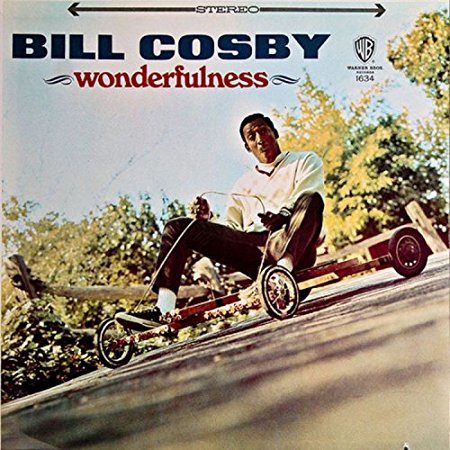
In my house growing up, we had six Bill Cosby albums on vinyl. I wore grooves into those grooves and memorized bits that my siblings, cousins, and I passed back-and-forth. Listening to albums and giggling ourselves to sleep was legitimate fun on middle school sleepovers. Sure, I was surprised at how misogynistic I found Himself (the HBO special whose success and material directly fed The Cosby Show) when I re-watched it a few years back, but that didn’t stop me from buying all those old vinyl albums on CD. Now, of course, those CDs have also been trashed.
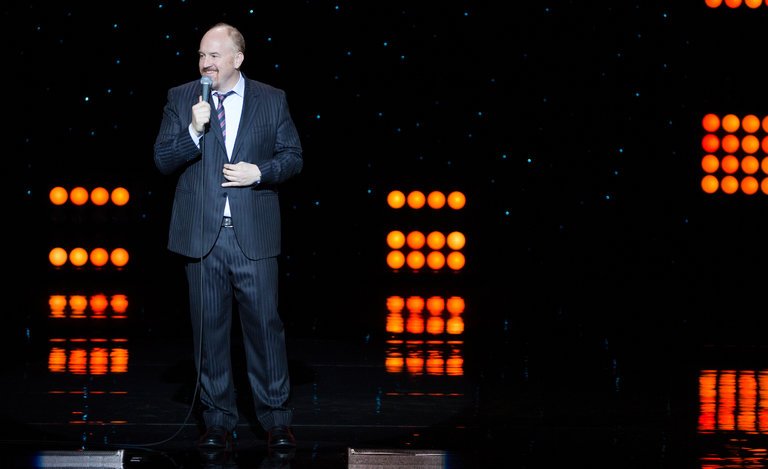
I’d read about Louis CK but I thought they were bullshit rumors, stemming from a Jen Kirkman podcast that she removed because everyone assumed it was about CK. She’d left it anonymous so people harassed her for information, and his supporters just harassed her. Kirkman vehemently denied it was about him, but her description of an auteur comedian so revered he’s “basically a French filmmaker” really only applied to CK. Still, I took Kirkman at her word. Her second word, not her first word, because, you know… he was my favorite stand up. At least I got to see him live before all the legitimate news outlets reported on him, before he admitted to masturbating in front of unwitting women and harassing others. I’m watching every comedian Netflix has to offer and there’s a chuckle here and there, but no one scratches me right where I itch like he did.
Are CK’s crimes on par with Cosby’s, or Mystikal’s? No. If we’re qualifying morally bankrupt behavior, no, CK is “not as bad” as Cosby or Mystikal. But can I put his behavior out of my mind long enough to enjoy his work? That’s also a no.
Which brings me painfully, inevitably, to my personal hero, Sherman Alexie. I know a lot of Natives, writers and non-writers alike, have issues with him, but that’s just backlash because he’s shouldering the burden of being The Voice of Modern Indians in publishing. His books, stories, poetry, and films have meant a lot to me over the years, and they’ve meant a lot to my Akwesasne Kanien’kehá:ka family.
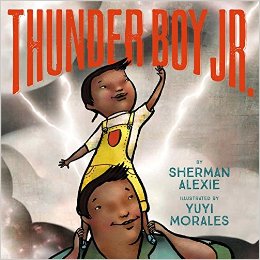
I’ve swooned over Alexie many times in the past. I also had a couple of posts in the pipeline, one that’s only his magnificent poem “Tribalism,” another one that’s about how different my life might have been if I’d had his picture book Thunderboy Jr. when I was a child. I haven’t posted them because I’m not a prolific blogger and I wanted to space them out so the site didn’t become Ode to Alexie.
Well.
Sherman Alexie is the latest sex-monster outed by the #MeToo movement, so I don’t see myself praising his work going forward. Not because he’s suddenly lost his talent, but because I couldn’t enjoy and celebrate his work knowing what he’s done to Native women.
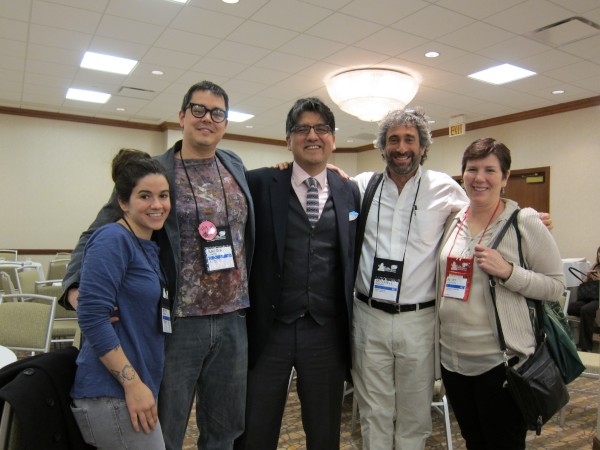
When I attend book industry functions I have one story that’s guaranteed to kill, and it’s about the time I met Sherman. Now, the picture we took together the following day after a panel on censorship is making the rounds with these accusations of harassment. I saved that page from Publishers Weekly and taped it above my desk at work. I look so damned happy in that photo, arm and arm with Sherman, neither of us The Only Indian in the Room because we have each-other.
He supported aspiring Native writers. He also threatened and attempted to extort aspiring Native writers. The generosity side-by-side with the predation made it all but impossible for victims to speak up. It was manipulative, exploitative, reprehensible behavior.
When Sherman decided to include a white poet posing as Chinese in the Best American Poems 2015 collection even after the poet outed himself, the explanation Alexie crafted was amazing. I waited for something similar on these accusations with my stomach in knots, certain that somehow he’d admit to everything but put together a string of words that would make me forgive him and hate myself for doing so, or he’d somehow convince me that he was the one person the #MeToo movement had wrongfully accused. I needn’t have worried. His “apology” was mealy-mouthed bullshit. He said the accusers are being truthful about his actions and should be believed, yet he has no recollection of ever harassing anyone and that doing so would be totally out of character. Hey, Sherman, remember that time you told me to grow some balls? Well grow some fucking balls, son.
You know better, Sherman. I’ve read your work and what the women in your family – and you yourself – have suffered at the hands of colonialism is no joke. Tragic is the only word. The women in my family also have stories, Sherman. You know America has made Native women’s flesh into a commodity to be stolen, used, exploited. You know this, and you chose to make yourself part of the problem. I’ve loved you for decades but all those N8Vs living that Rez life you despise, they had you pegged correctly. Budding writers came to you for guidance and love, came to the one voice in publishing who should have been a safe space, and you turned out to be nothing more than another predator of beige skin. Hang your head in shame.
I feel ashamed for not listening to people who’ve never left the rez when they called you colonized. I feel ashamed for supporting you and loving your work, which all feels like a lie. So what do I do? Not just with the signed books, the DVD of Smoke Signals, the drawing of balls you gave me that I never got around to framing, but with this feeling of shame? How do I fill this void where a hero once stood?
Thankfully, Native voices are everywhere. Just ask Brandon Hobson, who put together this list of 10 Essential Native American novels for Publishers Weekly.
He mentions Tommy Orange in the introduction; I’ll write more fully about his groundbreaking There There in the future but add it to your reading list in the meantime. Ted Williams from the Tuscarora Nation, Oren Lyons of the Seneca, Robbie Robertson of the Mohawk, and Joanne Shenandoah of the Oneida Nation are all voices that hit close to home for me.
Rebecca Roanhorse, Vine Deloria Jr., Louise Erdich, Two-Shoes (Louis V. Clark), Joy Harjo, Layli Long Soldier, An Indigenous Peoples’ History of the United States and All the Real Indians Died Off by Roxanne Dunbar-Ortiz. Hell, my fucking aunts and uncles, my cousins. Really, who needs this fucking guy? I’m sorry, Sherman; you’re cancelled.
And there’s a whole lot more where you came from who haven’t forgotten where they came from.


 Aaron John Curtis
What do you think?