

I’m a member of the Akwesasne Nation. Mohawk by birth, I’m here to tell you that working with the power who is out to destroy you will never, ever end well. As proof, I offer ten reasons why Amazon’s takeover of online retail mirrors the slaughter of Native Americans.
10) The “Threat” Will Take Care of Itself
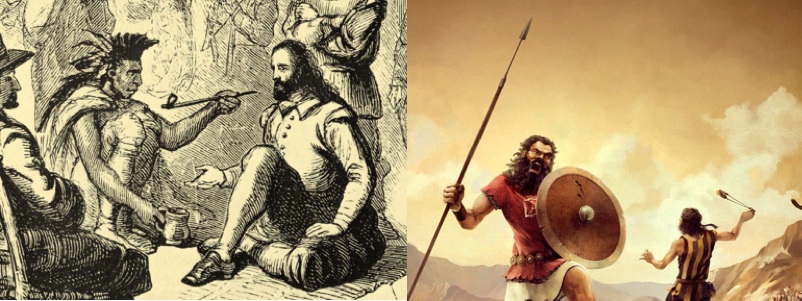
Some tribes, upon seeing the European’s appetite for tobacco consumption, believed there was no “white problem.” Left to their own devices, Europeans would smoke themselves to death before they did any permanent damage.
When Amazon began gobbling up book sales, some indie booksellers opined that Amazon was too large. It would overreach, expand too far too fast, and succumb to the sprightly indies who could respond more quickly to changes in the marketplace.
Hey, guess what? The spry booksellers and Just Say Nohawks were both wrong.
9) The Newcomer Wasn’t Taken Seriously
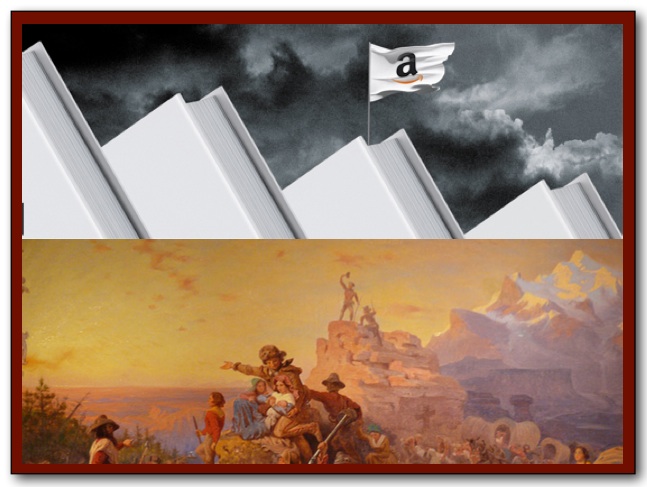
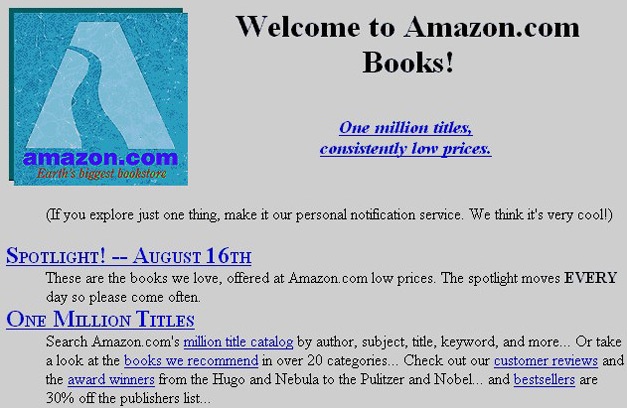
Amazon founder and CEO Jeff Bezos saw the internet as an unconquered territory that had just opened up. To analyze buying patterns on this new frontier, he chose books because they were the least likely object to be damaged in shipping. Since the desire to sell books is more calling (or curse) than cash cow, his hedge fund buddies thought Bezos was crazy for quitting the investment game to sell books. How could any entrepreneur see profits in a business with such thin margins?
Europeans had a lot of ideas that we Indians found crazy; particularly, owning land. Might as well try owning air or water or deer.

Oh, wait. You were serious about that? Shit.
8) Jeff Bezos is the Reincarnation of Andrew Jackson
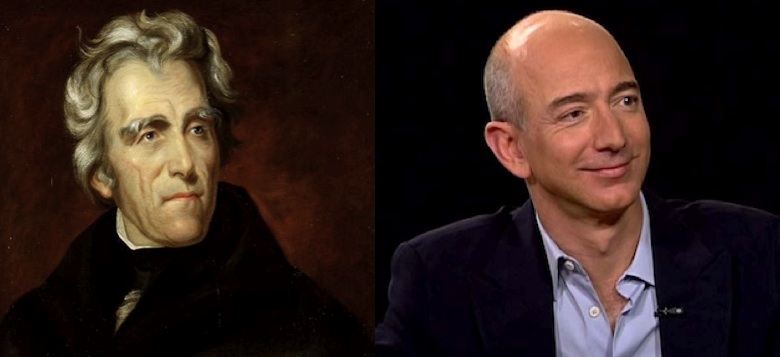
 Andrew Jackson, who birthed the Indian Removal Act, was nicknamed “Old Hickory” for his toughness and forceful personality. During his pre-presidential days, he insisted on slaughtering indigenous women and children after winning battles to complete the extermination. Frontiersmen called him “Indian Killer” and the Cherokee dubbed him (the ironically much-less-menacing) “Sharp Knife.”
When renegotiating contracts with small publishers, Amazon CEO Jeff Bezos told his employees to think of them the way a cheetah thinks of a gazelle. One former employee called Bezos “The Dread Pirate Bezos” after a pirate made famous for leaving no survivors. And I’d like to beat him with an old piece of hickory.
7) The Big Five and the Five Nations (or is it the Six Nations and the Big Six?)
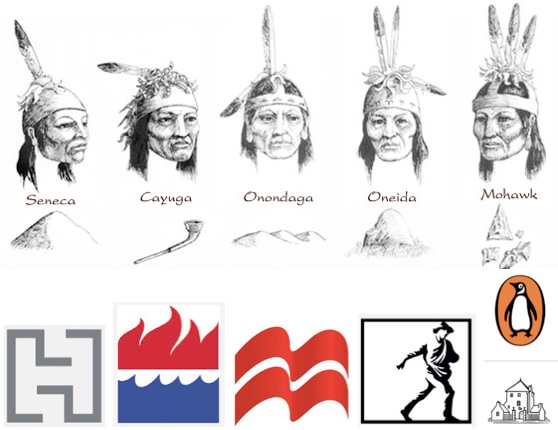
The Five Nations – Mohawks, Oneidas, Onondagas, Senecas, and Cayugas – formed under the Great Law of Peace a thousand years ago. Once they ceased fighting, they became the most powerful cultural force in the hemisphere. A matrilineal, politically sophisticated group of horticulturalists, farmers, fishers, and hunters, the Haudenosaunee practiced herbal medicine, tapped trees for maple syrup, and influenced the Bill of Rights and the Constitution.
The “Big Five” – Hachette, Harper Collins, Macmillan, Penguin Random House, and Simon & Schuster – have been around since 1826, 1817, 1843, 1897, and 1924, respectively. They’ve brought us Kipling, Twain, all the Bronte sisters, Tolkien, Salinger… they’ve brought us the stories that have defined our culture.
Fun Fact: Prior to the merger of Penguin and Random House last year, publishing’s Big Five were the Big Six. The Five Nations accepted the Tuscarora in 1722 and have been the Six Nations ever since. So it’s the same, except it’s the opposite.
6) Contracts (or Treaties) are Deals with the Devil
Amazon used books to gather information on shoppers so they could become The Everything Store, but they’ve grown so large that they are destroying the publishing business which made them. Once upon a time, it was, “You gave us 50% on new-release hardcovers last season? Give us 55% and we’ll order even more.” Now it’s, “Give us 65% or we’ll cut our orders to nothing.” The rates for featuring titles on the home page and paying for recommendations (“customers who purchased The Absolutely True Diary of a Part-Time Indian also purchased Bridget Jones Diary because they got confused”) have become extortive. Purchasing patterns have morphed from data to be gathered into something than can be manipulated.
I’d hate to see your titles get lost in the shuffle. So here, please eat this poisoned beef before you starve to death.
Treaties are great, aren’t they? But if our land sits on anything valuable – and the largest reserves of oil, coal, uranium, natural gas, and rare earth metals in the U.S. are all on native land – then the government can award mining contracts to non-natives, pollute our land and poison our water getting at it, or just straight up kick our asses out. Again.
Your people depend on fishing for their livelihood? Sorry, we’ve got dams to build. Folks drive forty miles out of their way to save taxes on cartons of your cigarettes? I think we need to raid your business. Oh, and this corner of the Rez you haven’t built on? We’re just going to leave our toxic waste there.
You’re welcome.
5) The Government Offers Justice for Some More Than Others
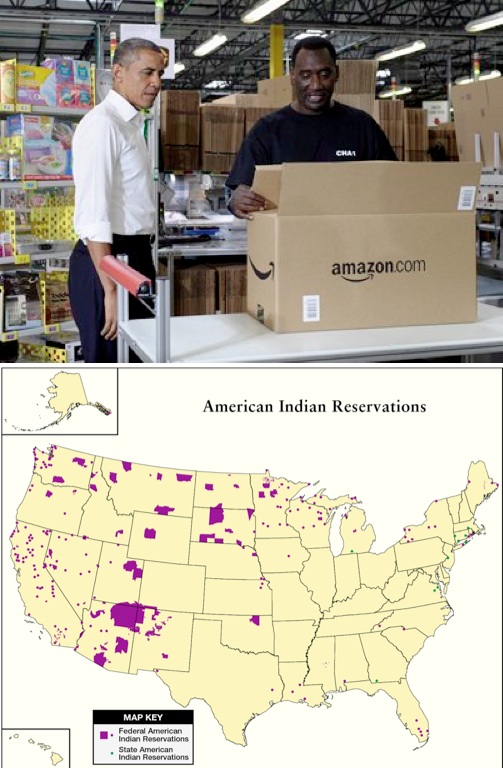
Since the Trail of Broken Treaties protest in 1972, little has been done to honor the treaties that defined reservation space during Europe’s westward expansion. These are just pieces of paper, after all. Just ask the Massachusett Tribe, who were unrecognized by the state of Masschusetts as anything other than ordinary citizens in 1869. They spent over a century fighting for recognition. Finally, a judge agreed that the Massachusetts Indians did exist and that they did, in fact, own a large portion of Massachusetts. Unfortunately, with all the homes, schools, and businesses built on the land, it would have been impractical to give it back (or pay a Native Tax or something; I don’t know, I’m not a law guy). The Massachusetts won in spirit, but they are still an unrecognized nation, both federally and in the state which bears their name.
In 2010, Amazon accounted for 80-90% of the ebook market. Like print books, most sold at a loss. Using the wild theory that books have value, five publishers partnered with Apple to try and break the ebook stranglehold by adopting the Agency Model, a pricing structure which would have increased the price of ebooks by an average of $4 each. The Justice Department found the publishers and Apple guilty of restriction of free trade. Most publishers settled for undisclosed sums but we know Macmillan was fined twenty million dollars and Penguin seventy-five million, while Apple will pay up to $840 million in anti-trust fines. So basically, the government busted up an alleged Monopoly for… trying to relieve Amazon’s 90% ebook market share.
4) Living in the Shadow of Fear

The Federal Government cherry picks which tribes it decides to recognize as sovereign nations, and which tribes are just wandering cultural collectives. They’ve also imposed blood quantum on a traditionally inclusive culture. People who live on reservations wake wondering if today is the day that the US Government declares all treaties null and void, if today is the day their way of life ends. Mothers wonder if their children will marry other natives, or if they’re looking at the last members of their family who are “officially” Native.
When publishers won’t give in to their contract demands, Amazon removes their buy buttons, delays shipping on their titles, and tanks their new releases by not accepting pre-orders. Just ask Macmillan, who saw all the buy buttons on their ebooks disappear. Ask Hachette, with thousands of titles currently delayed by 3-5 weeks and dozens of marquee authors whose books you can’t pre-order.
None of the publishers want to side with Hachette for fear that the Justice Department will repeat 2010, slapping them back into being Amazon’s bitch. They wake each day worried that their titles are next.
3) CEO Michael Pietsch is the Reincarnation of Seminole Warrior Osceola
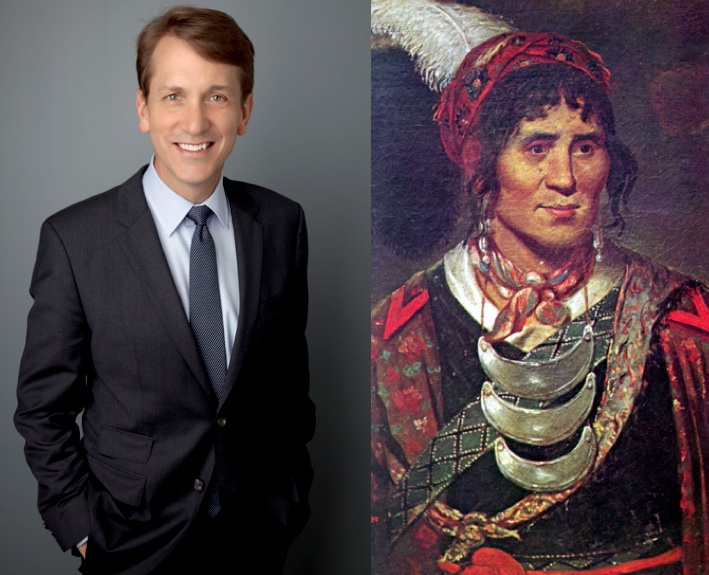
In 1835, six thousand Federal Troops arrived in Florida to forcibly relocate the Seminoles to lands west of the Mississippi under the Treaty of Payne’s Landing. From four thousand Seminoles, Osceola pulled 900 warriors to fight. Ten years, thousands more federal troops, $40,000,000 of taxpayer money, and the betrayal of Osceola later, 500 Seminoles still clung to the Everglades.
In 2014, Hachette refuses to bend to Amazon’s will. The New York Times published an article entitled, “Hachette Chief Leads Book Publishers in Amazon Fight.” Hachette… Chief.
Here’s a useful tip Mr. Pietsch: if Amazon invites you to Seattle for “negotiations,” don’t go. It’s a trap. Use email, use phones, just don’t end up buried headless like Osceola.
2) Turning People into Commodities
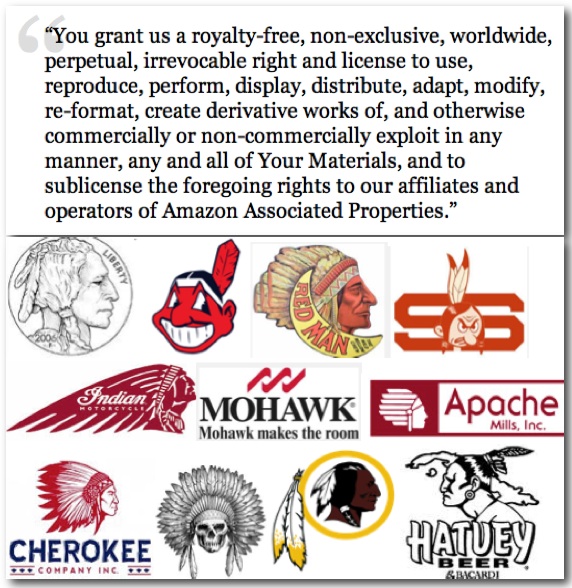
Become one of their affiliates and Amazon can do anything they want with whatever you upload. Quit the affiliate program to open your own website and you’ll end up competing with the ghost of your old page online. Amazon will still list you as the seller, but it won’t be you. Since Amazon has better Search Engine Optimization, you’ll be lucky if anyone even finds your site. In other words, Amazon can use your words, products, and images however they see fit, and you’ll be powerless to stop them.
There are plenty of Native people in America right now – three or four million, depending on how you want to count us. How much control do we have over how we’re presented to the world, to our cultural symbols, to our own names? When’s the last time someone asked my opinion on flooring, paper, lifts, gas, speakers, or dumb-fuck haircuts? And that’s just my nation.
Then again, I’m Kanien’keháka (“People of the Flint”) from Akwesasne (“Where the Partridge Drums”). Mohawk is just a nonsense word made up by the Dutch. So I’ve got nothing to complain about, really.
1) The End Game
“Your people are driven by a terrible sense of deficiency. When the last tree is cut, the last fish is caught, and the last river is polluted; when to breathe the air is sickening, you will realize, too late, that wealth is not in bank accounts and that you can’t eat money.”
– Alanis Obomsawin, Abenaki Nation
“I want you to proceed as if your goal is to put everyone selling physical books out of a job.”
– Jeff Bezos, addressing employees of Amazon.com


 Aaron John Curtis
What do you think?